NSW LearnerNSW DKT practice
Get NSW Learner free

Practise for the NSW driver knowledge test

Road Safety

Alcohol and drug limits for NSW drivers

In the test. The DKT tests alcohol and drugs as road safety questions: the BAC limit for each licence type, breath and drug testing, medicines, and how alcohol changes the way you drive.

NO ENTRY

Quick answer

What is the alcohol limit for learner and P plate drivers in NSW?

In NSW, every learner and every P1 or P2 driver must drive with a blood alcohol concentration of zero, so not a single drink beforehand. On a full car licence the limit is under 0.05. Drivers of buses, taxis, rideshare cars, heavy vehicles above 13.9 tonnes or dangerous goods must be under 0.02. Anyone supervising a learner must also be under 0.05.

The short version

  • L, P1 and P2 drivers must have a BAC of zero
  • On a full car licence, keep your BAC under 0.05
  • Only time brings your BAC down
  • Driving with any illegal drug present is an offence, however you feel
  • Prescribed medicines count too if they impair your driving

Blood alcohol limits by licence

Your BAC limit depends on the licence you hold and what you are driving.

  • Learner, P1 and P2: zero.
  • Full car licence, including a full interstate or overseas licence: under 0.05.
  • Under 0.02 for drivers of buses, taxis and rideshare cars, heavy vehicles above 13.9 tonnes, and dangerous goods.
  • Supervising a learner: under 0.05, and the supervisor can be breath tested like a driver.
  • Drinking alcohol while driving is banned for everyone, whatever their BAC.

Zero means zero. On L or P plates, any alcohol in your breath or blood while driving is an offence.
What BAC and a standard drink mean

Knowing the units helps you see why counting drinks is unreliable.

  • BAC measures alcohol in the blood: 0.05 means 0.05 grams in every 100 millilitres.
  • An Australian standard drink holds 10 grams of pure alcohol.
  • Glasses poured at home or in bars often hold more than one standard drink.
  • The same number of drinks gives different readings depending on your size, food, health and the true size of each drink.

Sobering up takes time

Plenty of myths promise a quicker way to get under the limit. None of them work.

  • Only time lowers your BAC. Coffee, food, a shower or exercise do not.
  • After heavy drinking late at night, you may still be over your limit the next morning.
  • Even at zero BAC, a hangover can still leave you drowsy and slow to react.
  • Alcohol slows reactions, weakens judgement, narrows and blurs your vision and makes speed and distance harder to judge, all while making you feel more capable.
  • The effects begin with just one or two drinks. Alcohol is a depressant, slowing how your brain takes things in, and crashes involving a drinking driver tend to be more serious than others.

Unsure whether last night has worn off? Leave the car at home and find another way.

Breath tests, drug tests and interlocks

Police in NSW can test drivers at any time, with no reason needed.

  • A random breath test can happen anywhere, even if you have done nothing wrong.
  • Refusing a breath test is a serious offence with heavy penalties.
  • Roadside drug tests screen for cannabis, methamphetamine, MDMA and cocaine.
  • The offence is the drug being present. Feeling normal, or having used it days earlier, is no defence.
  • A court can order an interlock: an ignition-linked breath tester you must blow into and pass before the engine will start.

Medicines and other drugs

Legal drugs can impair your driving as much as illegal ones, so treat every tablet with care before a drive.

  • It is also an offence to drive impaired by any drug, and that includes medicine your doctor prescribed.
  • Read the label on a new medicine and ask a doctor or pharmacist whether it affects driving. Find out how any drug acts on you before you get behind the wheel.
  • Borrowed tablets and driving do not mix. If a friend offers you some, check the label first, and say no to a prescription medicine or anything that warns of drowsiness or driving.
  • Two or more medicines taken together can change how each one works, so ask your doctor or pharmacist whether that mix is safe for driving.
  • Alcohol combined with medicines or other drugs makes impairment much worse.

Getting home safely

The decision that matters most is made before the first drink, not at the end of the night.

  • The safest amount of alcohol before driving is none at all.
  • Late Thursday, Friday and Saturday nights are the peak for drink driving crashes, so drive expecting that someone near you has been drinking.
  • On those late nights, alcohol plays a part in roughly half of all serious crashes.
  • Sort out your way home before you start drinking: a sober friend, a lift, a taxi or public transport.
  • Stay out of any car whose driver has been drinking or taking drugs.

Try this

Worked examples to think through

Picture the situation, decide what you would do, then open the answer.

1Try this

You are on red P1 plates, and half an hour before you head home a friend hands you one light beer. Should you drink it?

Show the answer

No. Your limit is zero, the same as every P1 and P2 driver, so even a single light beer would put you over it.

2Try this

On a full licence, you were drinking heavily until 2 am and have to drive to work at 7 am. What is the right call?

Show the answer

Get a lift or catch public transport. A few hours of sleep, coffee or a shower will not clear the alcohol, and after a heavy night you can still be over 0.05 by morning.

Practise it

Three alcohol and drugs questions to try

Real questions from the 71 in the NSW Learner bank for this topic, three options each like the test. Pick one to see the answer, the reason and the rule.

Question 1 of 3 Road Safety

What blood alcohol concentration must a learner driver have?

Right.Not quite. The answer is A.

Learners may not have any alcohol at all in their breath or blood when driving.

Source: Road Transport Act 2013 (NSW)

Question 2 of 3 Road Safety

Can a fully licensed driver drink a can of beer while driving if they stay under 0.05?

Right.Not quite. The answer is C.

NSW bans drinking alcohol while you are driving, whatever your BAC.

Source: Road Rules 2014 (NSW) rule 298-1

Question 3 of 3 Road Safety

A learner and their supervisor are involved in a crash. Who can police breath test?

Right.Not quite. The answer is B.

A supervisor is treated like a driver for alcohol testing, so both can be tested.

Source: Road Transport Act 2013 (NSW)

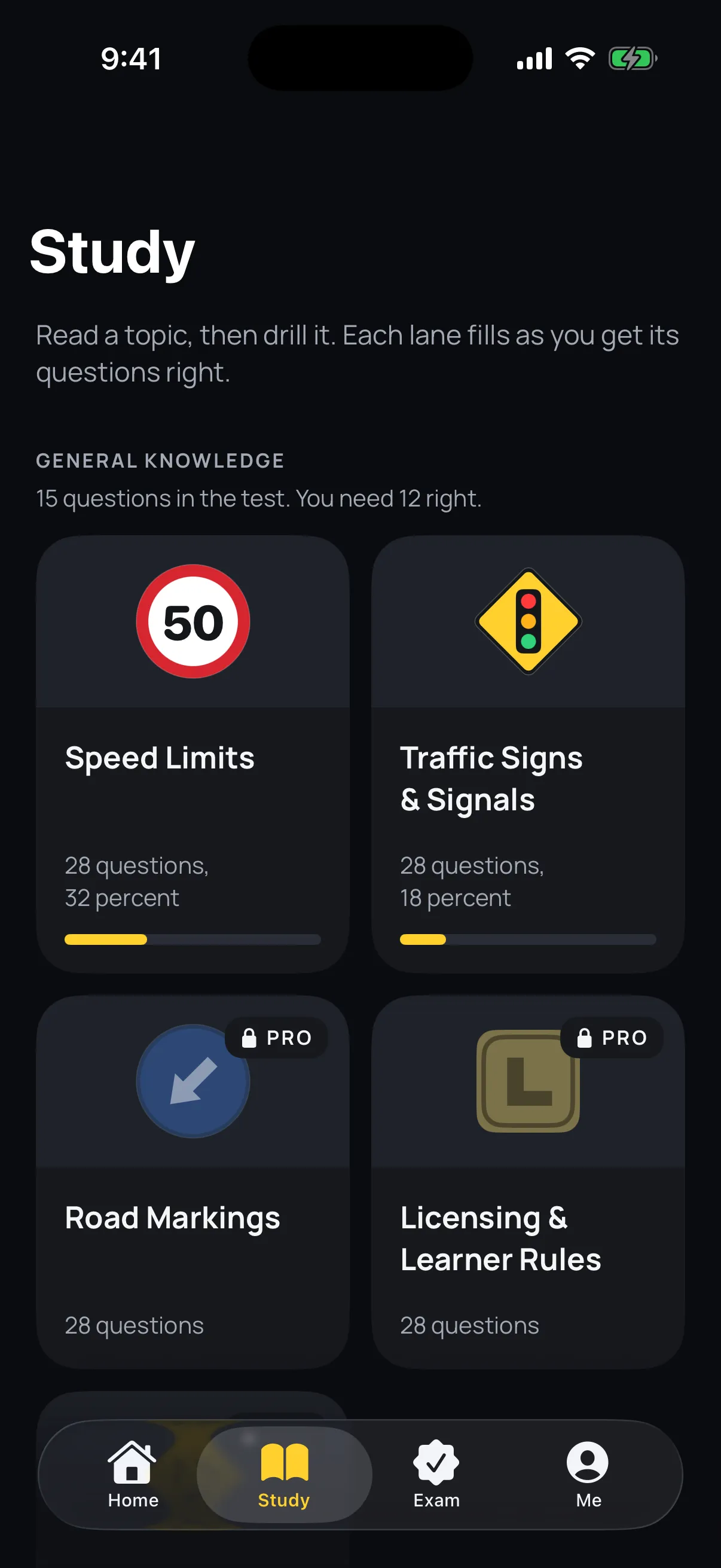
The NSW Learner Study tab with topic tiles, each with its drawn sign and a lane showing progress

Practise this topic in the app

Drill alcohol and drugs until it is automatic

In NSW Learner this topic has its own lesson and a drill of 71 questions. Questions you miss come back sooner, the lane on the tile fills as you get them right, and the mock exam mixes it in with everything else in the test's layout.

Common questions

Can a P plater have one drink in NSW?
No. Both P1 and P2 licences carry a zero alcohol limit, so even one drink before driving breaks the law.
What does 0.05 BAC mean?
It means 0.05 grams of alcohol in every 100 millilitres of blood.
Does coffee help you sober up?
No. Coffee may make you feel more awake, but only time lowers your blood alcohol.
What drugs do NSW roadside tests detect?
Cannabis, methamphetamine, MDMA and cocaine.
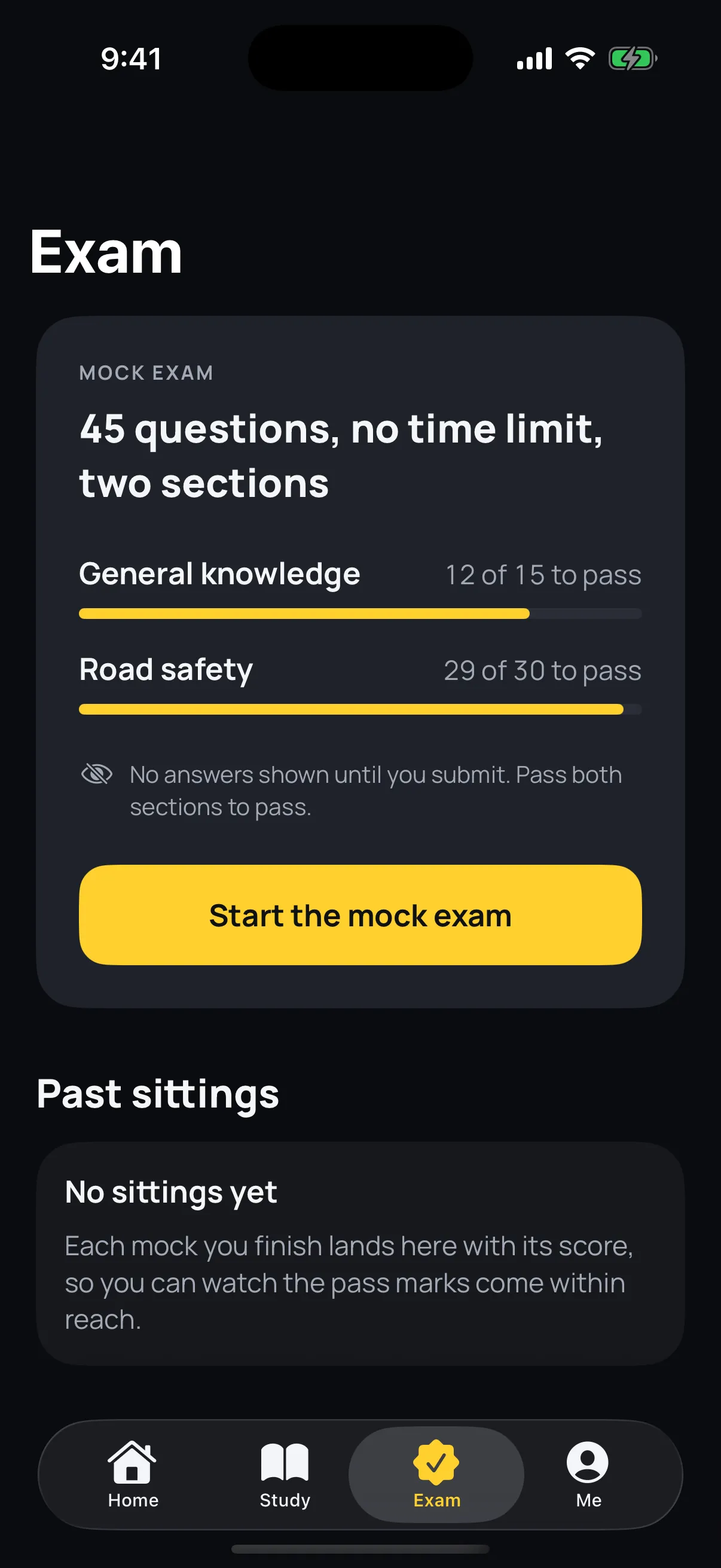
NSW Learner mock exam screen: 45 questions, no time limit, two sections with their pass marks
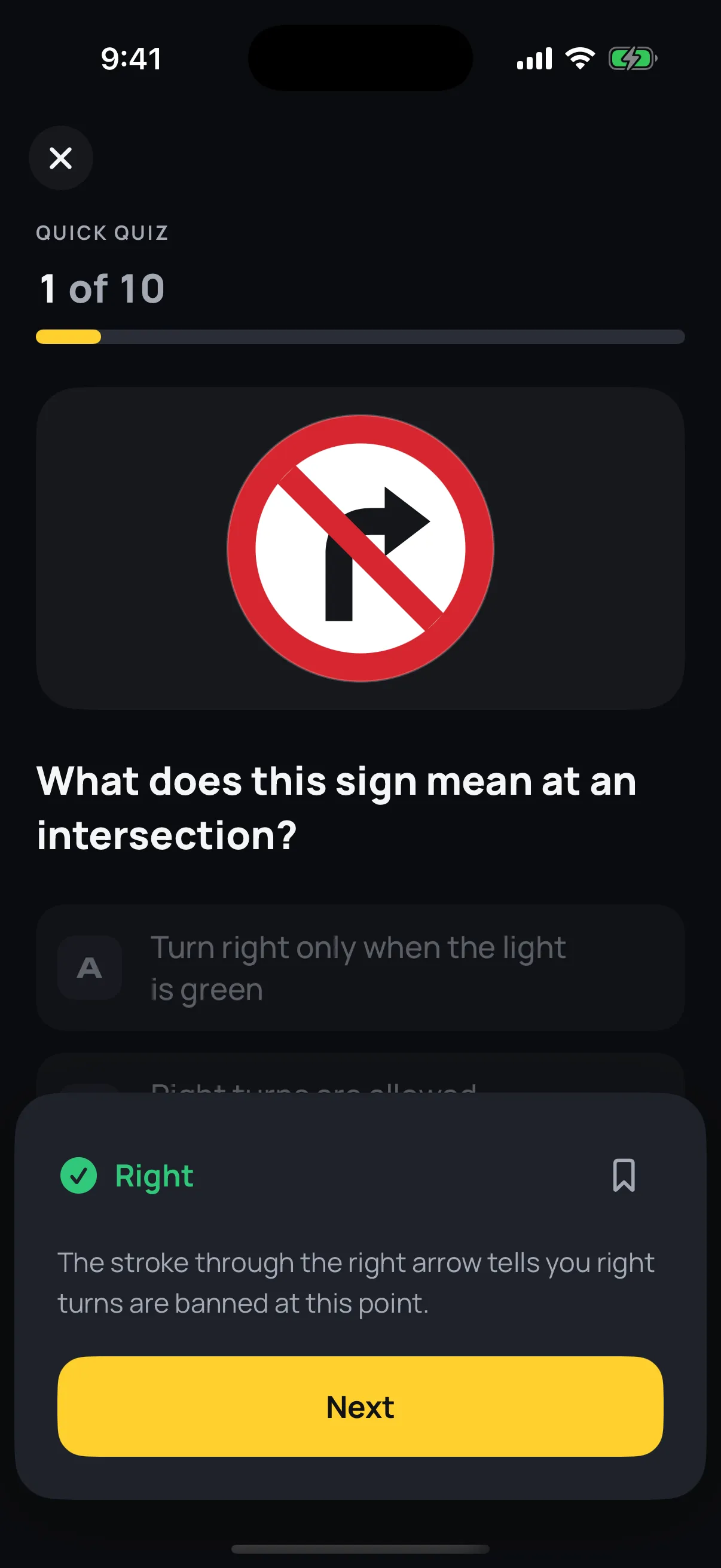
A practice question in NSW Learner answered correctly, with the explanation card
LP

Your L plate turns green when you would pass

NSW Learner is the practice app behind this site. Short lessons for every topic, drills that bring back what you got wrong, and a mock exam in the test's layout. It reads your recent scores and tells you honestly when you are ready.

  • Free one full mock exam, and the speed limits and traffic signs and signals topics with their lessons, drills and 179 questions
  • Pro all nineteen topics, all 1,177 questions and unlimited mock exams, one-time purchase, no subscription, no ads
  • Private no account, works offline, your progress stays on your phone

Independent study app. Not affiliated with Transport for NSW or Service NSW.