NSW LearnerNSW DKT practice
Get NSW Learner free

Practise for the NSW driver knowledge test

Road Safety

Emergency vehicles, crashes and road hazards in NSW

In the test. Expect these in the DKT's road safety section: emergency vehicles, duties at and after a crash, car faults such as a blowout, and hazards like animals, smoke and level crossings.

Quick answer

What do you do when an emergency vehicle comes up behind you in NSW?

Hear a siren or see flashing blue or red lights behind you? Move out of the vehicle's path as soon as you safely can, without braking hard. Either signal on its own is enough. At an intersection, let it through even if your light is green. When one is stopped with lights flashing on a road signed 80 km/h or less, go past at no more than 40 km/h.

The short version

  • Make way for sirens and flashing lights when it is safe
  • Roads signed 80 or less: 40 km/h past any stopped emergency vehicle
  • After a crash: stop, check for danger, call 000 for injuries, swap details
  • Brake firmly for an animal and keep your lane
  • Never enter a level crossing while its lights flash

Moving and stopped emergency vehicles

Police, ambulance and fire crews need a clear path, and people working at the roadside need room.

  • Warning lights or a siren, even one without the other: clear the way when you safely can, normally by easing over to the left, and never pull out ahead of it.
  • At an intersection, an emergency vehicle using its lights or alarm goes first, whatever your light shows.
  • Stationary with lights flashing on a road signed 80 km/h or lower: your top speed going past is 40 km/h.
  • Above 80 km/h: a reasonable speed, a wide gap, and the far lane if you can safely move.
  • Yellow flashing lights on a tow truck or breakdown van count too. A vehicle stopped on the far carriageway, beyond a median strip, does not.
  • Give way to firefighters and anyone else on foot near the stopped vehicle.
At and after a crash

Every driver involved in a crash has duties, and knowing the order keeps you safe.

  • Stop, then look for hazards like moving traffic, spilt fuel or fire before you approach.
  • Call 000 if anyone is hurt.
  • Help the injured, but move a person only if they are in immediate danger, such as from fire.
  • Swap names, addresses and registration, plus the owner's details if the car is not yours.
  • Police come out if a person is injured, trapped or killed, if a driver appears to be under the influence, if someone drives off or will not exchange details, or if a bus or truck has to be towed.
  • No police at the scene but a vehicle was towed? Report the crash to them within 24 hours.

When the car fails

Calm, smooth actions work better than sudden ones in nearly every breakdown.

  • Skid: come off the accelerator and steer gently towards where you want the car to go.
  • Tyre blowout: grip the wheel, ease off and let the car slow gradually before pulling over.
  • Brake failure: pump the pedal, change to a lower gear and apply the parking brake gently.
  • Stuck accelerator: shift to neutral, brake firmly and steer to a safe place.
  • Breakdown: pull well left, switch on hazard lights and wait somewhere safe away from traffic.
  • Smoke from the bonnet: stop, switch off, get every passenger out and well clear, then ring 000.

Hazards on the road

Some dangers come from the road and its surroundings rather than from other drivers.

  • On a long, steep descent, choose a lower gear so the engine helps and the brakes stay cool.
  • If a kangaroo or other animal jumps out, brake firmly and stay in your lane. Swerving can roll the car or put you into oncoming traffic.
  • A traffic controller's hand-held STOP sign at roadworks carries the same force as a fixed one. Through the works, slow down, look out for workers and follow every sign.
  • Portable lights at roadworks are proper traffic lights. On red, wait at the sign that marks where to stop, even with no oncoming car in view.
  • Anything that drops off your car or trailer is yours to clear, once you can do it safely.
  • Turn back or take another route rather than drive into bushfire smoke.

Level crossings

A train cannot stop in time for you, so the safety margin has to come from you.

  • A train needs a long way to pull up, so come to every crossing ready to stop, flashing lights or not. Signals that are dark still call for a slow approach and a look both ways.
  • A stop sign at the crossing means a full stop on every visit, then a look each way, moving on only once you are sure no train is near.
  • With a give way sign, slow right down, check both directions and let any train through first.
  • Lights flashing or bells ringing: wait until both have stopped and any boom gates have lifted all the way. Rising gates with lights still flashing can mean a second train, so do not go.
  • If traffic is queued on the far side, wait until there is room to clear the tracks completely.
  • If your car stalls on the crossing, get everyone out and well away before anything else.

Try this

Worked examples to think through

Picture the situation, decide what you would do, then open the answer.

1Try this

You are nearly at the line of a level crossing with boom gates when its lights begin to flash. The gates have not started to come down. Do you keep going?

Show the answer

No, you stop. Flashing lights mean a train is on its way, gates down or not, and you stay put until the lights switch off (rule 123).

2Try this

You bump another car in a car park. No one is injured, and the other driver wants your details. What do you have to hand over?

Show the answer

Your name and address and the car's registration, plus the owner's name and address if someone else owns the car (rule 287).

Practise it

Three emergency vehicles and hazards questions to try

Real questions from the 66 in the NSW Learner bank for this topic, three options each like the test. Pick one to see the answer, the reason and the rule.

Question 1 of 3 Road Safety

You hear a siren and see flashing lights in your mirror. What must you do?

Right.Not quite. The answer is A.

Make room for the emergency vehicle without braking suddenly or putting others at risk.

Source: Road Rules 2014 (NSW) rule 78

Question 2 of 3 Road Safety

RAILWAYCROSSING2 TRACKSSTOP ONRED SIGNAL

The bells are ringing and the lights are flashing at a level crossing, but the boom gates are still rising. What do you do?

Right.Not quite. The answer is A.

A second train may be coming, so wait until the warning lights stop before you move.

Source: Road Rules 2014 (NSW) rule 123

Question 3 of 3 Road Safety

On a divided road, an ambulance is stopped with lights flashing on the other carriageway, beyond the median strip. Must you slow to 40 km/h as you pass?

Right.Not quite. The answer is A.

The stopped emergency vehicle rule does not apply when the vehicle is on the far side of a road divided by a median strip. Still keep an eye out as you pass.

Source: Road Rules 2014 (NSW) rule 78-1

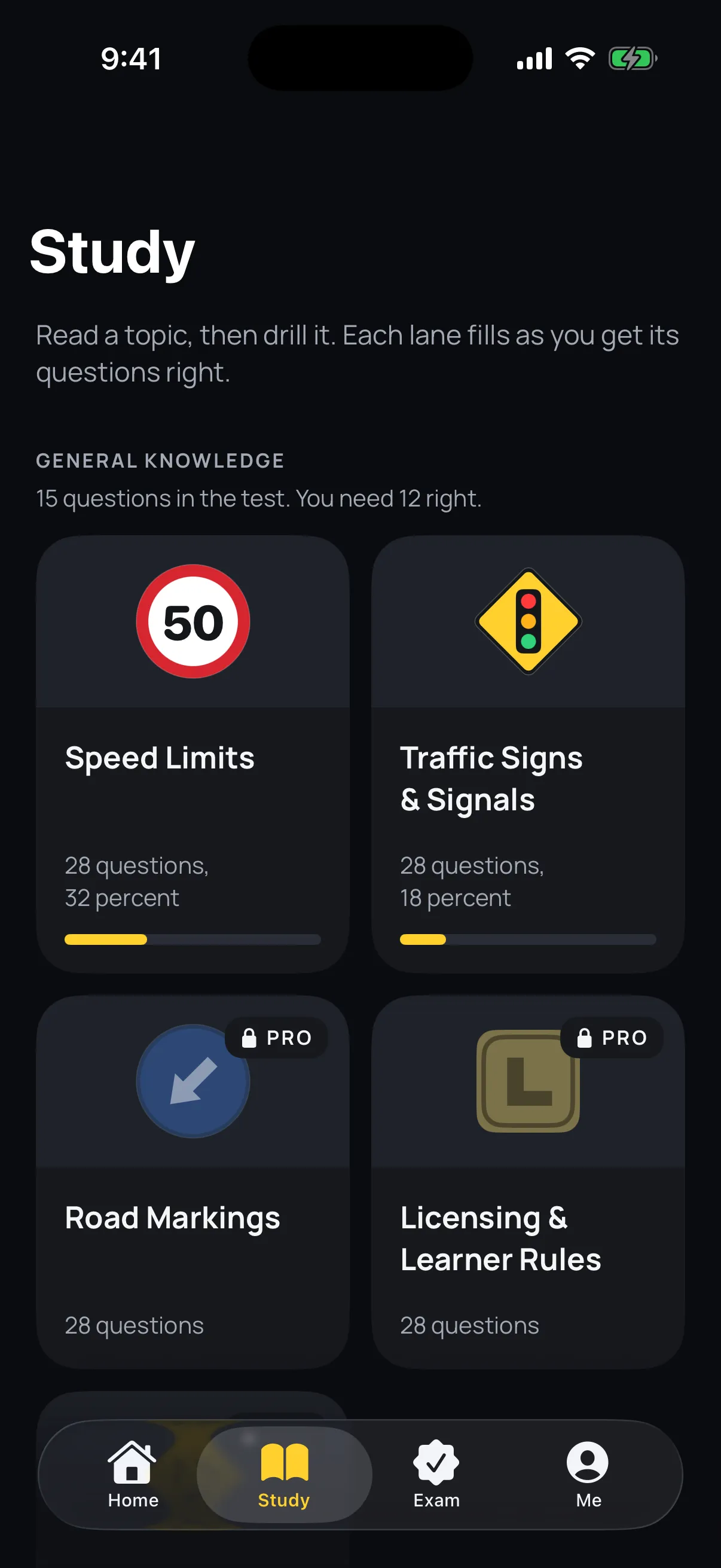
The NSW Learner Study tab with topic tiles, each with its drawn sign and a lane showing progress

Practise this topic in the app

Drill emergency vehicles and hazards until it is automatic

In NSW Learner this topic has its own lesson and a drill of 66 questions. Questions you miss come back sooner, the lane on the tile fills as you get them right, and the mock exam mixes it in with everything else in the test's layout.

Common questions

Do you have to slow down for tow trucks in NSW?
Yes. A tow truck or breakdown van with yellow lights flashing is covered too, so where the limit is 80 km/h or under you pass at 40 km/h at most.
When do you have to report a crash to police in NSW?
If police did not come to the scene but a car had to be towed, you must report it to them within 24 hours. They attend in person for injuries, deaths, trapped people, impaired drivers, drivers who fail to stop or swap details, and buses or trucks needing a tow.
Should you swerve to avoid a kangaroo?
No. Brake firmly and stay in your lane, because swerving can roll the car or put you into oncoming traffic.
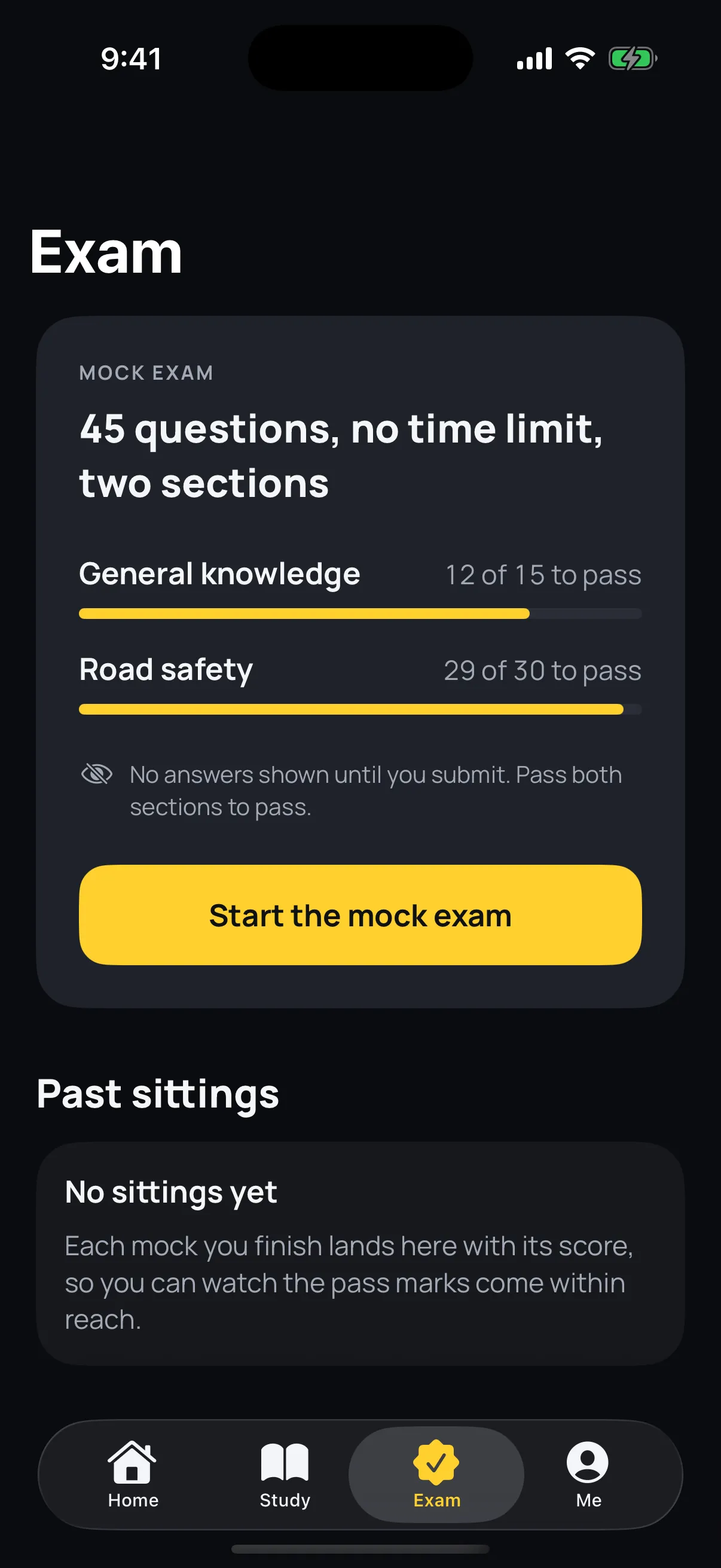
NSW Learner mock exam screen: 45 questions, no time limit, two sections with their pass marks
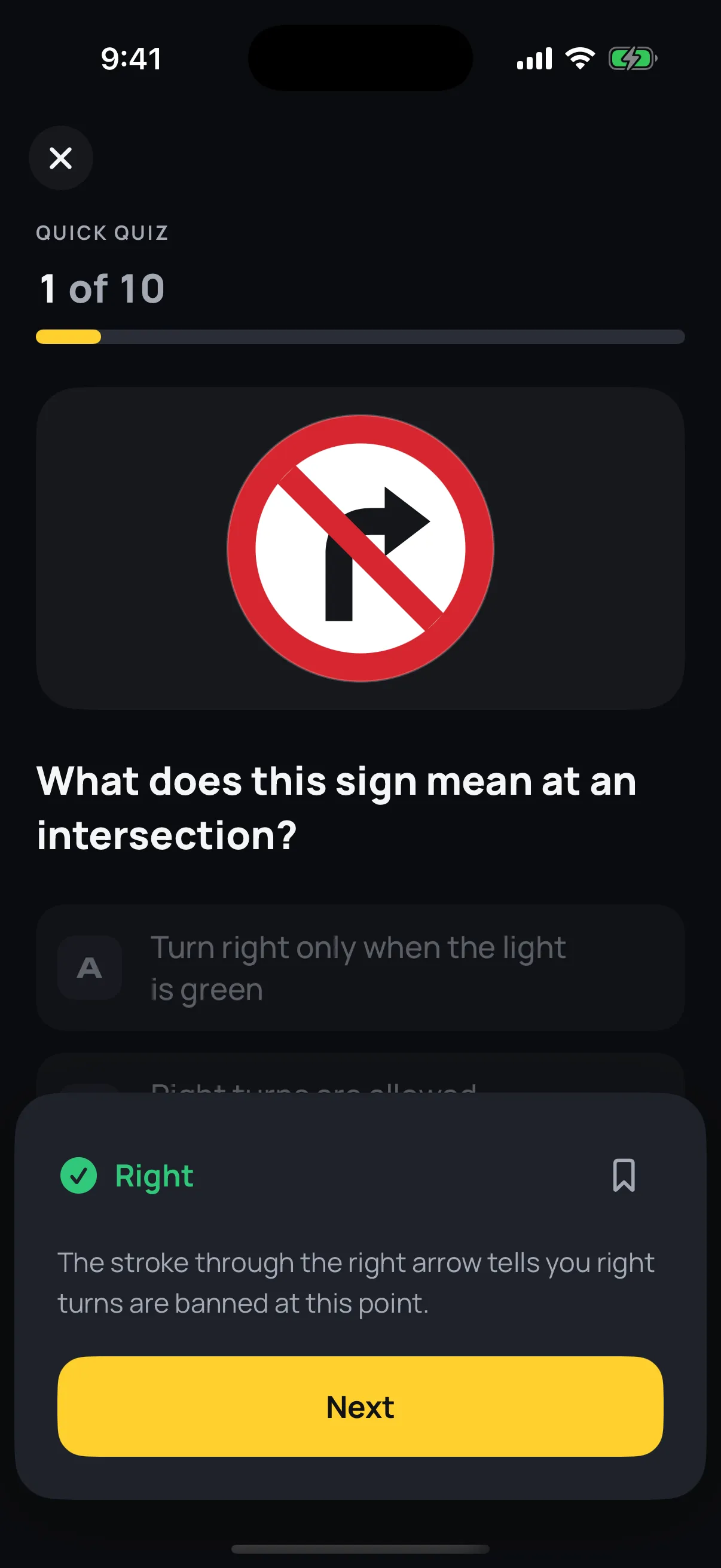
A practice question in NSW Learner answered correctly, with the explanation card
LP

Your L plate turns green when you would pass

NSW Learner is the practice app behind this site. Short lessons for every topic, drills that bring back what you got wrong, and a mock exam in the test's layout. It reads your recent scores and tells you honestly when you are ready.

  • Free one full mock exam, and the speed limits and traffic signs and signals topics with their lessons, drills and 179 questions
  • Pro all nineteen topics, all 1,177 questions and unlimited mock exams, one-time purchase, no subscription, no ads
  • Private no account, works offline, your progress stays on your phone

Independent study app. Not affiliated with Transport for NSW or Service NSW.