NSW LearnerNSW DKT practice
Get NSW Learner free

Practise for the NSW driver knowledge test

Road Safety

Phone rules, fatigue and distraction for NSW drivers

In the test. Road safety questions on the DKT test the phone rules for each licence stage, the signs of tiredness, what actually helps, and everyday distractions inside the car.

Quick answer

Can learner and P plate drivers use a phone in NSW?

No. On L plates, red Ps or green Ps in NSW you must not use a phone in any way while driving, including hands-free calls, Bluetooth, music and maps. Being stopped at lights or in traffic still counts. Once the car is parked clear of moving traffic you may use it, and any driver may pay with a phone wallet while stopped at a drive-through window or in a car park.

The short version

  • No phone use at all on L, P1 or P2 plates, hands-free included
  • No driver may hold a phone or text while driving
  • Sleep is the only real cure for fatigue
  • On long drives, stop for a break every two hours or sooner
  • Set up maps and music before you start

Phone rules on L and P plates

The phone rules for new drivers are the strictest in NSW, and the DKT checks the details.

  • Learner, P1 and P2: no phone use at all while driving, hands-free and Bluetooth included.
  • Sitting at a red light still counts as driving, so the ban still applies.
  • Use is allowed once you are properly parked, clear of moving traffic.
  • Tapping a phone wallet to pay while stationary at a drive-through window or in a car park is allowed.
  • A phone offence carries enough demerit points to suspend a learner or P1 licence, and double demerits apply in holiday periods.

Green P2 drivers are inside the full ban too. Bluetooth calls only open up on a full licence.
Phone rules for full licence holders

Once you hold a full licence the rules relax a little, but some bans apply to every driver.

  • Calls and audio are allowed by Bluetooth without touching the phone.
  • Mounted in a commercially made holder fixed to the car, the phone may be used for calls, audio and navigation. Maps on a phone lying loose on the seat are not allowed.
  • Nobody may hold a phone, or have it resting on their lap or body, while driving.
  • Texts, emails, social media and video are off limits to every driver, even while waiting at a red light.
  • Any screen playing video has to be out of the driver's sight, apart from aids such as navigation or a reversing camera.
  • Even a legal hands-free call can pull your mind off the road.

Spotting fatigue

Tiredness creeps up slowly and is easy to underestimate.

  • Warning signs: constant yawning, heavy eyelids and sore eyes, wandering across your lane, clipping the edge rumble strip, or missing a sign or exit.
  • Danger times: the late night hours, the very early morning and the middle of the afternoon.
  • After about 17 hours awake, your driving can suffer roughly as much as at a BAC of 0.05.
  • A microsleep is a few seconds asleep, often unnoticed. At 100 km/h, every one of those seconds carries you about 28 metres with nobody steering.

What actually beats tiredness

Only rest fixes fatigue. Everything else just delays it.

  • Sleep well before a long drive or an early start.
  • Plan a break at least every two hours.
  • Share the driving with another fully licensed driver.
  • Time long journeys so most of the driving happens in daylight.
  • If you feel drowsy, pull over somewhere safe for a 15 to 20 minute nap.
  • After a long night shift, sleep first or find another way home.

Coffee and energy drinks mask tiredness for a while, and when they wear off it can return suddenly.

Other distractions in the car

Anything that takes your eyes, hands or mind off driving raises your crash risk.

  • Set navigation and music before you move off.
  • At 50 km/h, two seconds of looking away covers about 28 metres.
  • Ask noisy passengers to keep it down, and pull over if you need to.
  • Eating and reaching for things take your hands and attention away, and no person or animal may sit in your lap.
  • After an upsetting argument, take a few minutes to settle before driving.
  • Medicine labelled as causing drowsiness, including some hay fever tablets, can leave you as impaired as a sleepless night.

Try this

Worked examples to think through

Picture the situation, decide what you would do, then open the answer.

1Try this

You are a couple of hours into a trip to the coast. The yawns keep coming and your wheels have just wandered onto the edge line. What should you do?

Show the answer

Find a safe place to stop as soon as you can, and rest. A nap of 15 to 20 minutes will help, but sleep is the only real cure, so hand over to another driver or stay the night if that is an option.

2Try this

You are on your Ls, your phone sits in a cradle, and it rings while you are stopped at red lights. Can you take the call on speaker?

Show the answer

No. Learners, like P1 and P2 drivers, may not use a phone in any way while driving, hands-free included, and waiting in traffic still counts. Ring back once you have parked (rule 300-1).

Practise it

Three fatigue and distraction questions to try

Real questions from the 52 in the NSW Learner bank for this topic, three options each like the test. Pick one to see the answer, the reason and the rule.

Question 1 of 3 Road Safety

Can a learner or P plate driver use a phone on hands-free while driving?

Right.Not quite. The answer is B.

Learner, P1 and P2 drivers are banned from all phone use while driving, including hands-free and Bluetooth.

Source: Road Rules 2014 (NSW) rule 300-1

Question 2 of 3 Road Safety

A fully licensed driver has their phone in a commercially made holder fixed to the car. What may they use it for?

Right.Not quite. The answer is C.

Full licence holders may touch a phone in a proper holder only for calls, audio and driver aids such as maps.

Source: Road Rules 2014 (NSW) rule 300

Question 3 of 3 Road Safety

A learner is caught using a phone while driving. What happens to their licence?

Right.Not quite. The answer is C.

A phone offence carries more demerit points than a learner or P1 driver's limit, and double demerits apply in holiday periods.

Source: NSW licensing rules

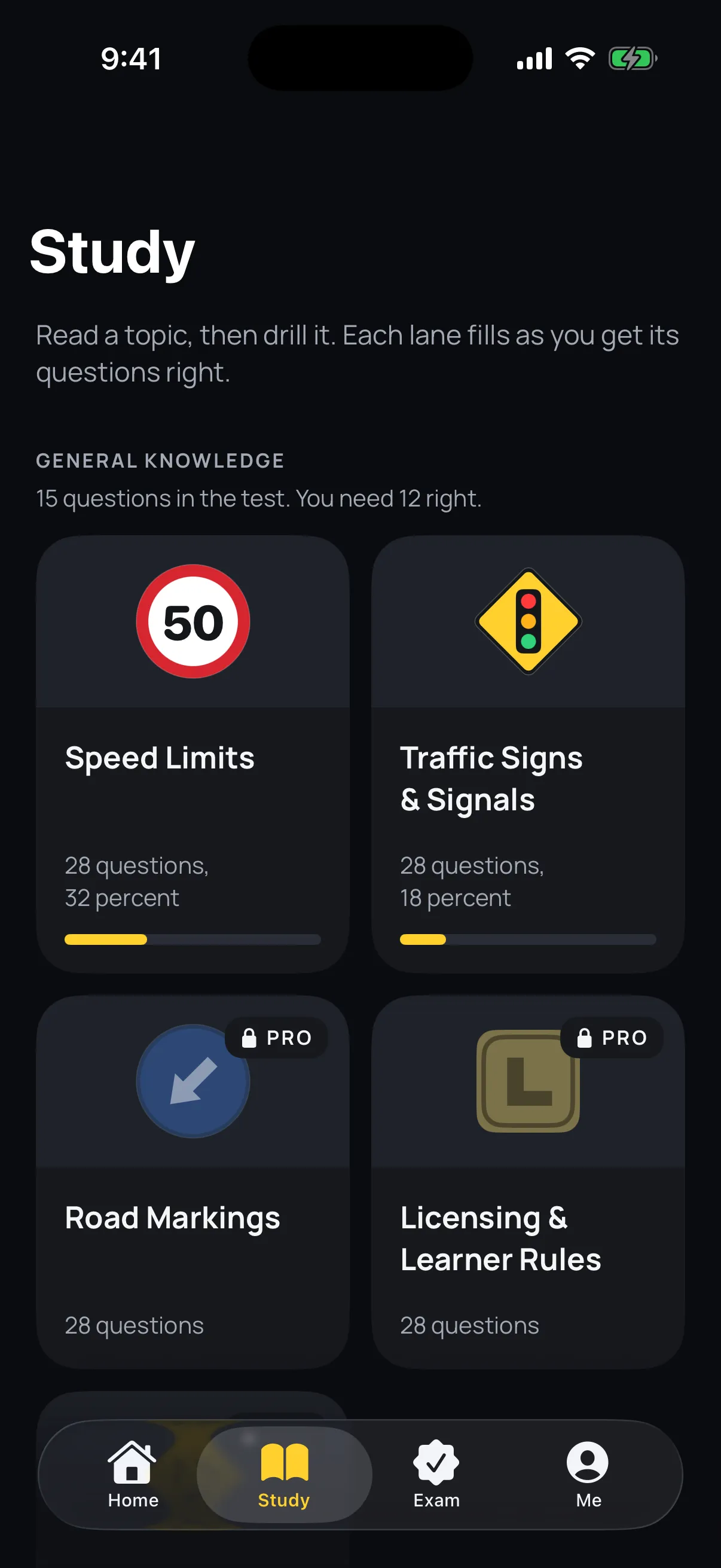
The NSW Learner Study tab with topic tiles, each with its drawn sign and a lane showing progress

Practise this topic in the app

Drill fatigue and distraction until it is automatic

In NSW Learner this topic has its own lesson and a drill of 52 questions. Questions you miss come back sooner, the lane on the tile fills as you get them right, and the mock exam mixes it in with everything else in the test's layout.

Common questions

Can P2 drivers use Bluetooth in NSW?
No. P2 drivers are under the same full phone ban as learners and P1 drivers, so no Bluetooth calls while driving.
Can I use my phone at a red light on my Ls?
No. Being stopped in traffic still counts as driving. Wait until you are parked clear of moving traffic.
Can learners use a phone for navigation in NSW?
No. Maps and music on a phone are both banned while driving on L or P plates.
How often should you take a break on a long drive?
At least every two hours, even if you do not feel tired yet.
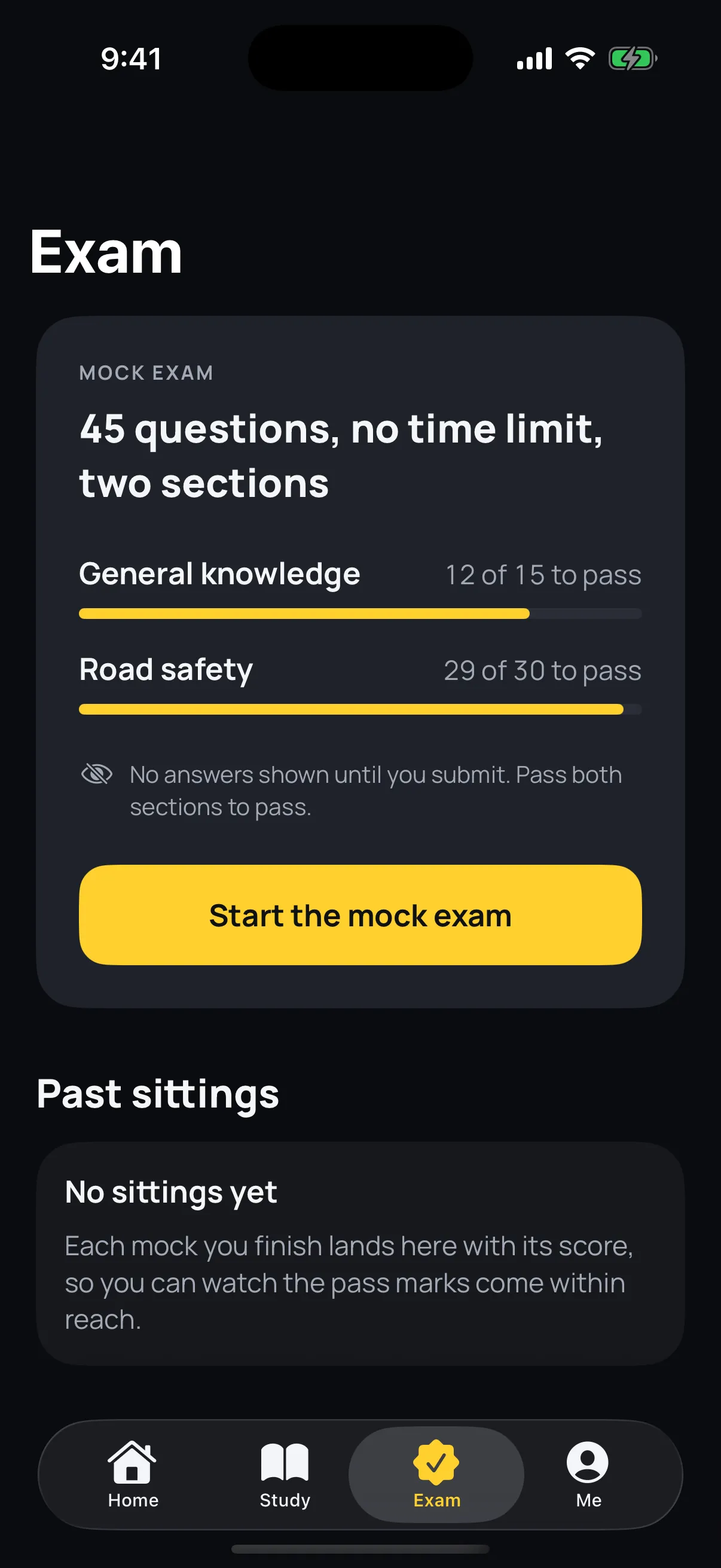
NSW Learner mock exam screen: 45 questions, no time limit, two sections with their pass marks
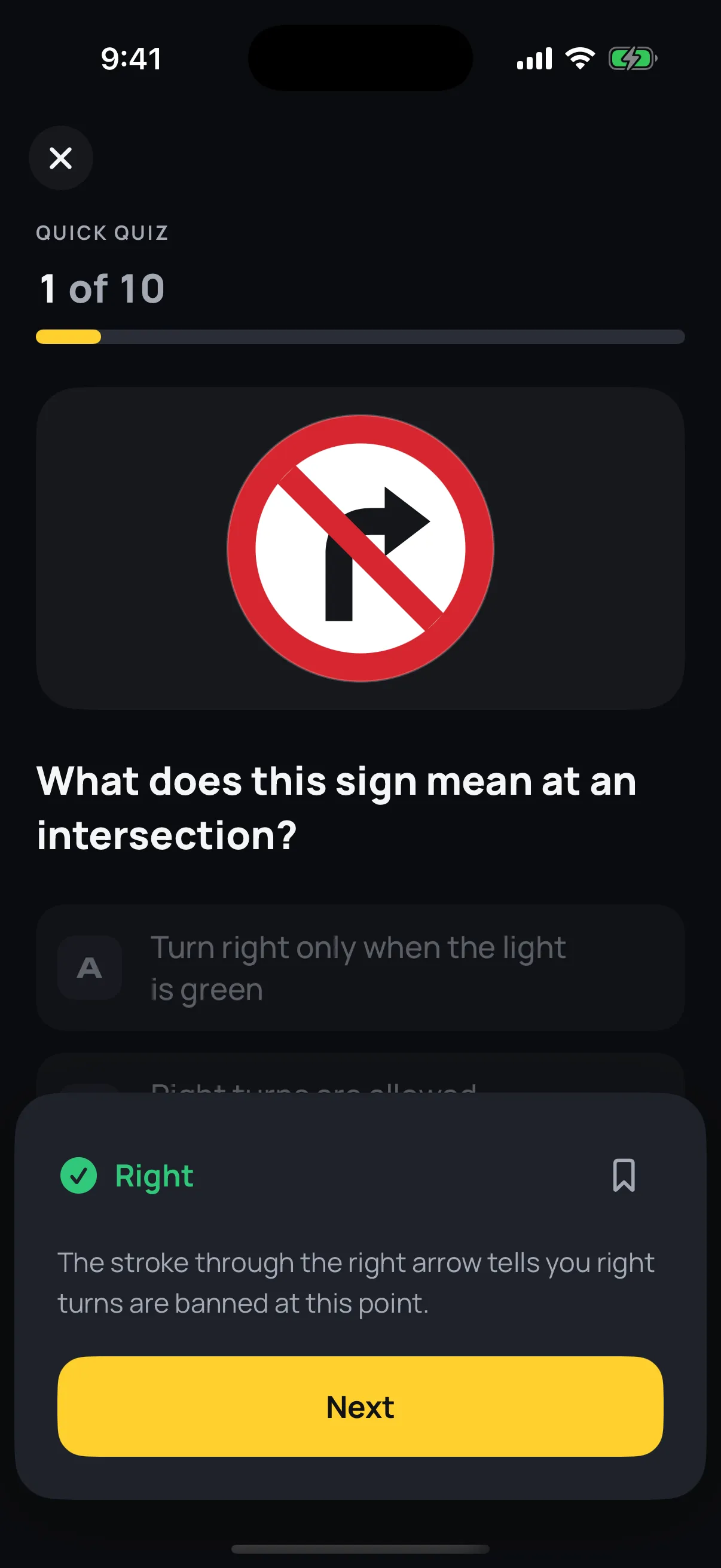
A practice question in NSW Learner answered correctly, with the explanation card
LP

Your L plate turns green when you would pass

NSW Learner is the practice app behind this site. Short lessons for every topic, drills that bring back what you got wrong, and a mock exam in the test's layout. It reads your recent scores and tells you honestly when you are ready.

  • Free one full mock exam, and the speed limits and traffic signs and signals topics with their lessons, drills and 179 questions
  • Pro all nineteen topics, all 1,177 questions and unlimited mock exams, one-time purchase, no subscription, no ads
  • Private no account, works offline, your progress stays on your phone

Independent study app. Not affiliated with Transport for NSW or Service NSW.