NSW LearnerNSW DKT practice
Get NSW Learner free

Practise for the NSW driver knowledge test

Road Safety

NSW seatbelt and child restraint rules

In the test. Belt questions often turn on an age: who must wear what, who gets fined and which seat a child may use. A few check how a belt, a head restraint or a child seat should be fitted.

Quick answer

What car seat does a child need in NSW?

Under 6 months, a rear-facing restraint. From 6 months to 4 years, rear-facing or forward-facing with an inbuilt harness. From 4 to 7, a harnessed forward-facing seat or a booster. From 7 to 16, a booster or an adult belt, which fits properly from about 145 cm tall. Whatever the age, the restraint must be approved and fitted to the right anchor point.

The short version

  • Each person needs their own belt or restraint on every trip
  • The driver answers for every passenger under 16
  • Babies under 6 months ride rear-facing
  • No child under 4 in the front row of a car with two or more rows
  • Wear the lap belt low across the hips, with the sash flat and firm

Drivers and adult passengers

Everyone in the car wears a belt on every trip, however short or slow.

  • The driver's belt must be fastened and adjusted properly. Buckled with a twisted, slack sash does not count.
  • Passengers 16 or older must wear a belt in any seat, front or back, and keep it on while the car moves.
  • From 16, a passenger who rides unbelted can be fined themselves.
  • If someone has not buckled up, ask them to before you move off, and wait until they have.
  • Reversing without a belt is allowed for full licence holders only. On L or P plates the belt stays on.
  • A medical exemption only counts with a current doctor's certificate kept in the car.
The driver answers for under 16s

For younger passengers, the law looks straight at the person behind the wheel.

  • The driver alone is responsible for any passenger under 16 who is not properly restrained.
  • That holds even when the child's parent is in the car with you.
  • The fine and demerit points land on you, not on the child.
  • A child who refuses to buckle up is still your problem, so stay put until they are restrained.

A 12 year old in the back who will not wear a belt? If police stop you, the driver is the one penalised.

Child restraints by age

The law sets the type of restraint by age, with height deciding the last step.

  • Under 6 months: rear-facing, however big the baby is.
  • 6 months to 4 years: rear-facing, or forward-facing with its own inbuilt harness.
  • 4 to 7 years: a harnessed forward-facing seat or a booster, never the adult belt alone.
  • 7 to 16: a booster or an adult belt. Keep the booster until the child is about 145 cm tall and the belt fits.
  • Use an approved restraint that meets the Australian Standard, fitted to the correct anchor point exactly as its maker instructs.

Height, not just age, decides when the booster goes. A 9 year old at 135 cm still needs one.

Front seats, sharing and laps

In a car with two or more rows, the back is where young children belong.

  • Under 4: never in the front row.
  • 4 to 7: in front only when every back seat is taken by another child under 7, and still in their proper restraint.
  • A single free back seat means the child rides in the back.
  • One person per belt: no sharing, and no child held on a lap, where a crash can crush or throw them.

Places no one rides, and children left in cars

Some risks have nothing to do with how the belt is worn.

  • Nobody travels in the boot, a ute tray or any part not built for passengers.
  • Arms, heads and hands stay inside the car, never out the window.
  • In an old car with fewer belts than people, an unbelted passenger is at greater risk in the front than the back.
  • A child must never be left alone in a parked car. Even on a mild 22 degree day, the inside can turn dangerous within minutes.
  • Paying for fuel or ducking into a chemist? Take the child with you.

Wearing a belt well

A belt only protects you when it sits in the right places.

  • Low, flat and firm: lap part across the hip bones, sash over the middle of the shoulder, with no twists or slack.
  • Set the head restraint level with the back of your head to guard against whiplash when you are hit from behind.
  • Pregnant? Lap belt under the bump across the hips, sash between the breasts and beside the bump, never across it.
  • A seatbelt is the most effective safety device in the car. Airbags are built to work with it and never replace it.
  • Belt up at 40 km/h too, because even slow crashes can throw an unbelted person into the dash.

Try this

Worked examples to think through

Picture the situation, decide what you would do, then open the answer.

1Try this

You offer a friend and her 3 year old a lift. Your car has two rows of seats and the back is piled high with shopping. Where does the child go?

Show the answer

In the back, in a suitable restraint, so clear the shopping first. Under rule 266 a child under 4 may never ride in the front row of a car with two or more rows.

2Try this

Your 14 year old cousin climbs into the back seat and leaves the belt off just as you are about to pull away. Who has to sort it out?

Show the answer

You do. The driver must make sure every passenger under 16 is restrained, and the fine and points fall on the driver, so wait until your cousin is buckled in.

Practise it

Three seatbelts and child restraints questions to try

Real questions from the 54 in the NSW Learner bank for this topic, three options each like the test. Pick one to see the answer, the reason and the rule.

Question 1 of 3 Road Safety

A 30-year-old passenger in your back seat says belts are only needed in the front. What is the rule?

Right.Not quite. The answer is A.

Every passenger aged 16 or older must wear a fastened seatbelt in whichever seat they sit.

Source: Road Rules 2014 (NSW) rule 265

Question 2 of 3 Road Safety

anchorpoint

You are fitting a child restraint that has a top tether strap. Where should the strap attach?

Right.Not quite. The answer is B.

A child restraint must be fitted to the correct anchor point and used the way the maker's instructions say.

Source: Road Rules 2014 (NSW) rule 266

Question 3 of 3 Road Safety

You give a mother and her 13-year-old a lift. The mother sits in front and the boy in the back does not buckle up. Who must make sure he wears it?

Right.Not quite. The answer is A.

The driver is responsible for every passenger under 16 being properly restrained, even when a parent is in the car.

Source: Road Rules 2014 (NSW) rule 266

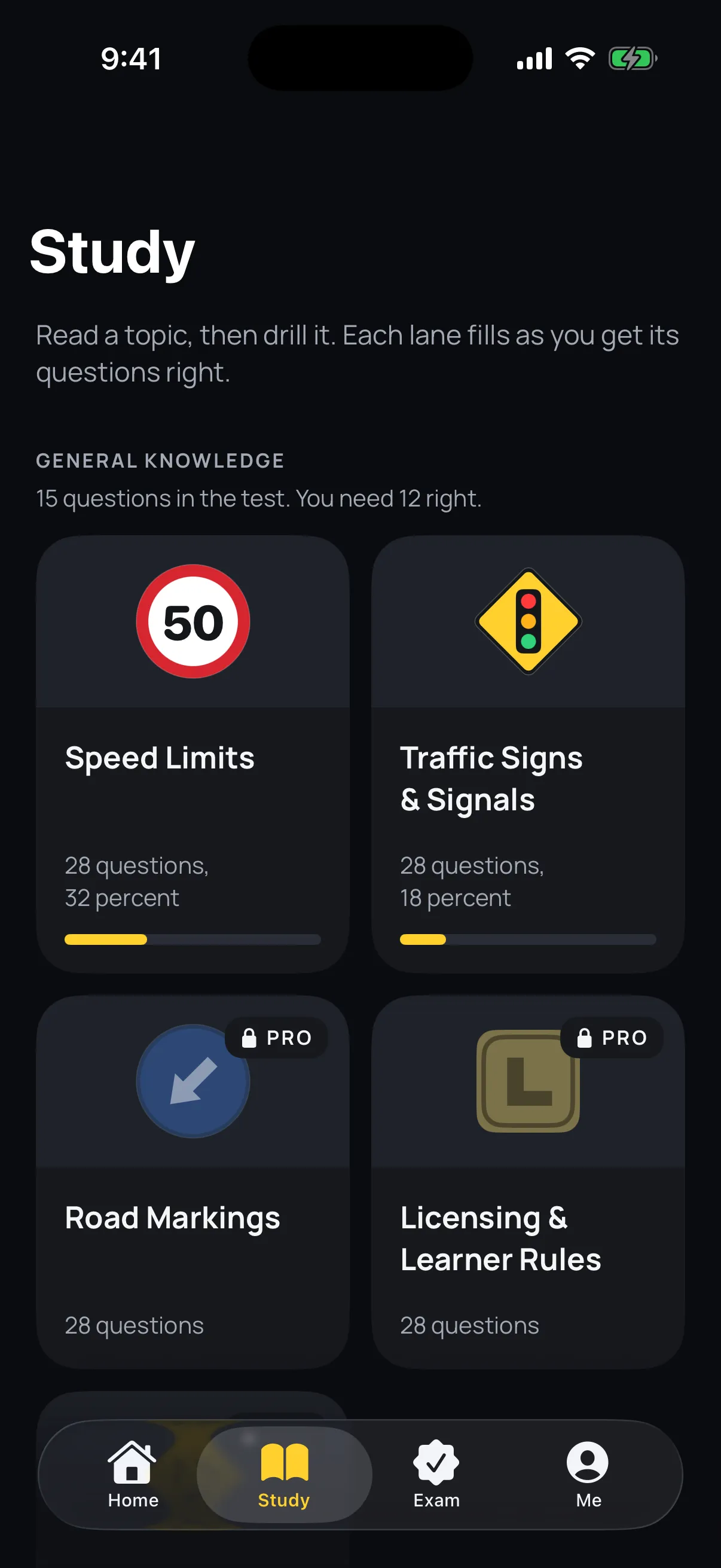
The NSW Learner Study tab with topic tiles, each with its drawn sign and a lane showing progress

Practise this topic in the app

Drill seatbelts and child restraints until it is automatic

In NSW Learner this topic has its own lesson and a drill of 54 questions. Questions you miss come back sooner, the lane on the tile fills as you get them right, and the mock exam mixes it in with everything else in the test's layout.

Common questions

Who gets fined if a passenger is not wearing a seatbelt in NSW?
For a passenger under 16, the driver. A passenger aged 16 or older can be fined for their own belt, and a learner or P plate driver can be fined as well.
Can a child sit in the front seat in NSW?
Not under 4 in a car with two or more rows. A child aged 4 to 7 may sit in front only when every back seat is taken by other children under 7.
When can a child stop using a booster seat?
From age 7, once they are about 145 cm tall and an adult belt fits them properly.
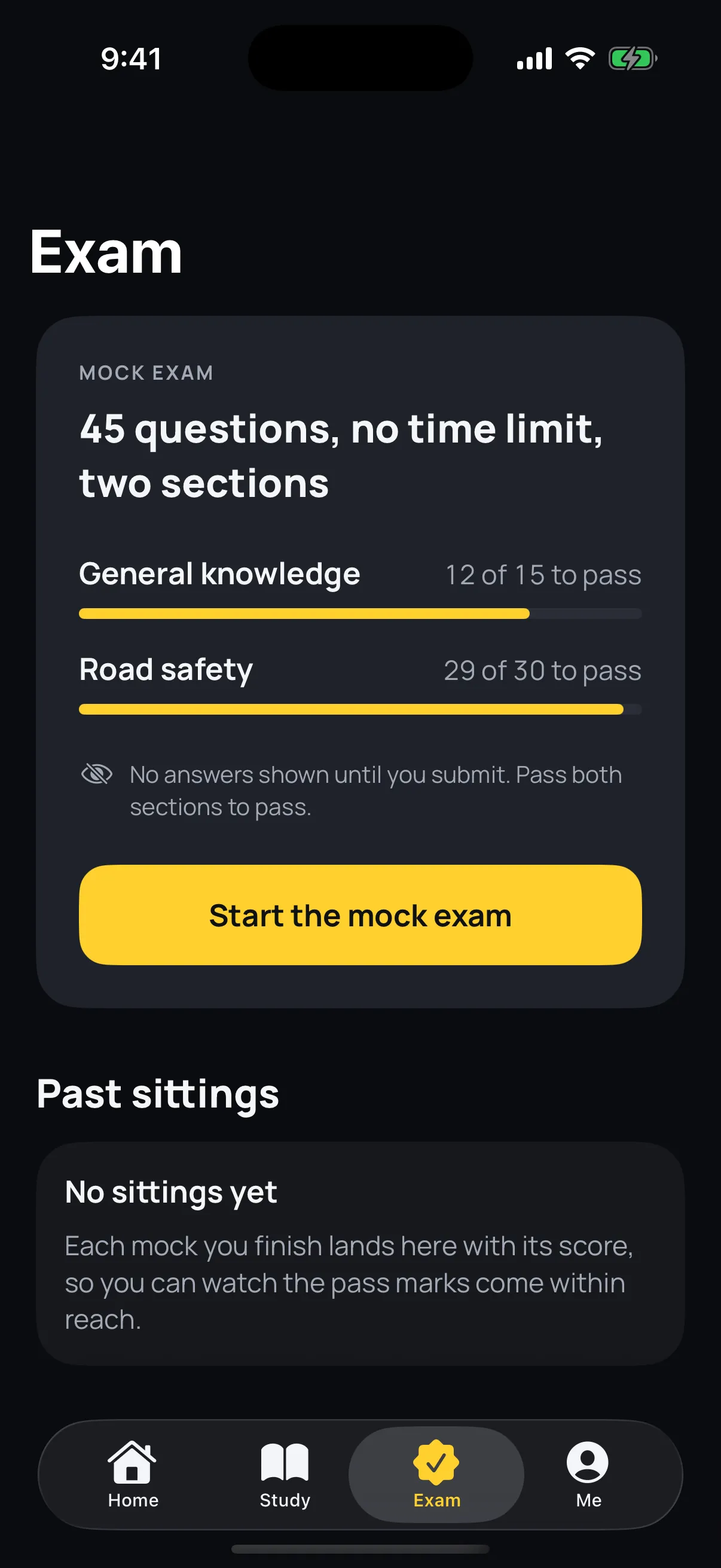
NSW Learner mock exam screen: 45 questions, no time limit, two sections with their pass marks
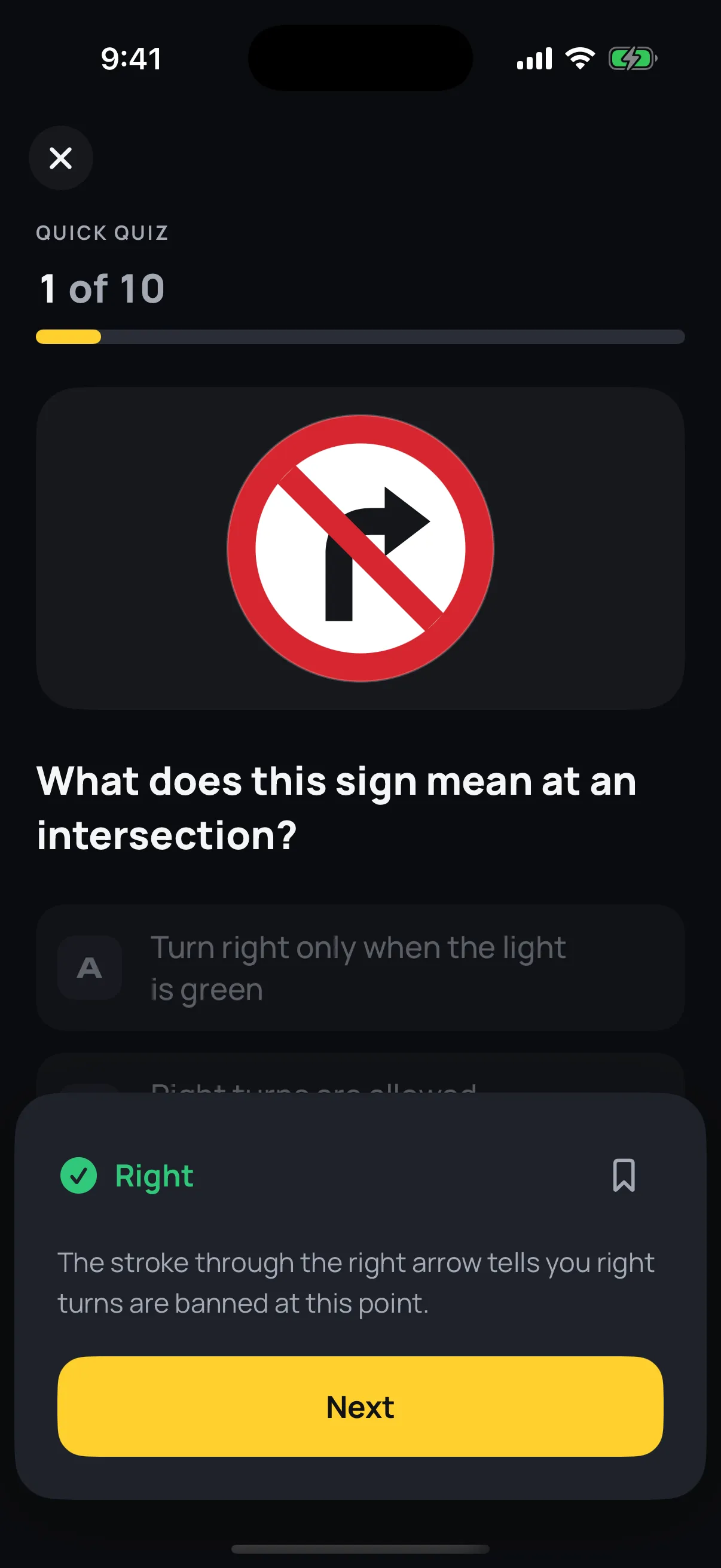
A practice question in NSW Learner answered correctly, with the explanation card
LP

Your L plate turns green when you would pass

NSW Learner is the practice app behind this site. Short lessons for every topic, drills that bring back what you got wrong, and a mock exam in the test's layout. It reads your recent scores and tells you honestly when you are ready.

  • Free one full mock exam, and the speed limits and traffic signs and signals topics with their lessons, drills and 179 questions
  • Pro all nineteen topics, all 1,177 questions and unlimited mock exams, one-time purchase, no subscription, no ads
  • Private no account, works offline, your progress stays on your phone

Independent study app. Not affiliated with Transport for NSW or Service NSW.